
Threat Profiling — Cybersecurity Intelligence Platform
Automated cyber-risk profiling organizes threat intelligence into evidence-backed profiles. Labverse built a staged analysis workflow with MITRE ATT&CK mapping and detection-rule exports to support analyst review and environment-specific testing.
Technology Stack
The Challenge
Organizations faced an ever-expanding threat landscape with thousands of known threat actors. Building comprehensive threat profiles required analysts to manually research intelligence, correlate indicators across databases, map behaviors to frameworks, and write detection rules — a process taking days or weeks per threat actor. Most organizations lacked the specialized staff to perform this work at scale.
Our Solution
We built a cybersecurity SaaS workflow combining staged research and analysis, threat-profile management, ATT&CK mappings, and detection-rule exports. Organizational workspaces, role-based access, and usage quotas support team workflows. Evidence review and deployment acceptance remain necessary.
The Results
The documented nine-stage pipeline brings profile research, behavioral mappings, and six rule-export formats into one workflow. Generated rules remain candidates for syntax, telemetry, semantics, and false-positive testing. The platform supports analyst work without promising perfect detection, complete isolation, or a measured time saving.
Full Technical Deep Dive
9 sections
What is automated cyber-risk profiling?
Automated cyber-risk profiling collects and organizes threat information so a security team can assess relevant behaviors and defensive priorities. This project's focus is threat-actor intelligence: profiles, MITRE ATT&CK mappings, and detection-rule candidates.
A profile is one input to risk assessment. It does not establish that an organization has been compromised or calculate its complete business risk. Asset exposure, existing controls, available telemetry, and the reliability of the evidence also matter.
How is a threat profile built from intelligence?
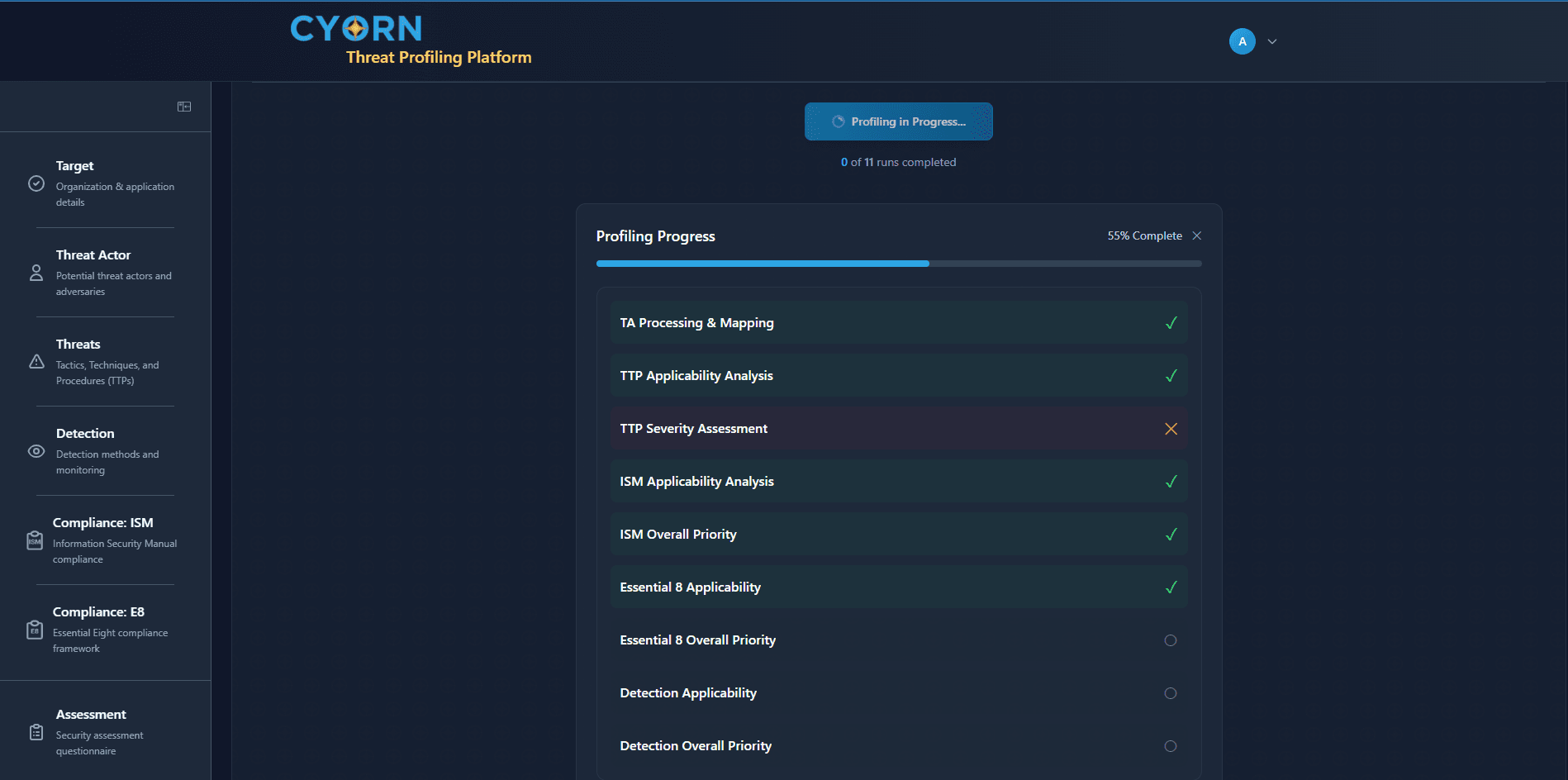
The project's documented nine-stage pipeline takes a threat actor name or description through research, evidence validation, classification, behavior mapping, and rule generation. Stages make intermediate outputs available for checks before later analysis uses them.
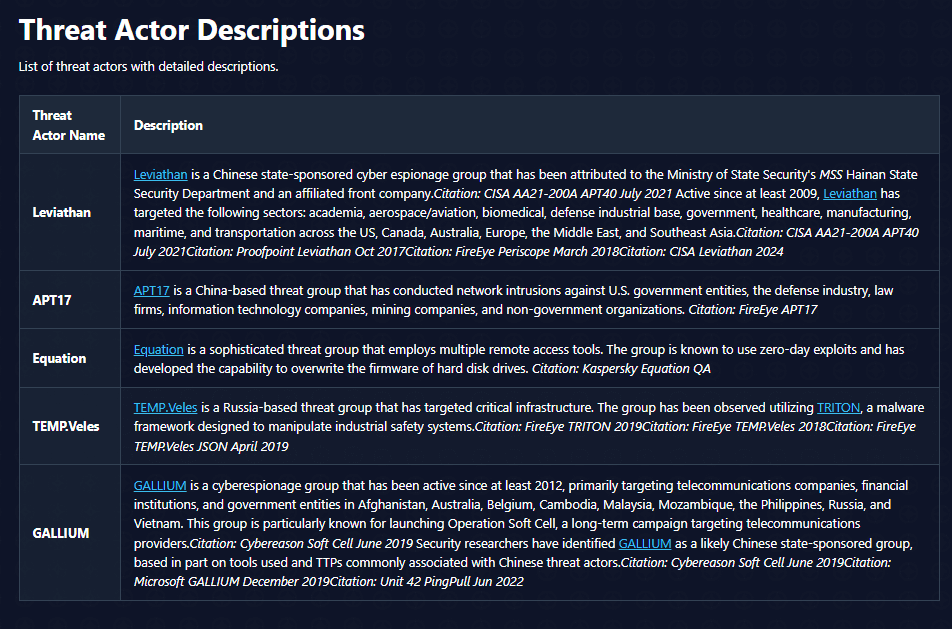
Identify the actor or alias, gather relevant sources, distinguish observations from inference, map supported behavior, and review proposed detections. Meaningful claims should retain their source and context so an analyst can investigate them. A generated statement is not evidence by itself.
Conflicting reports, uncertain aliases, outdated intelligence, and unsupported conclusions need explicit treatment. Processing time depends on scope and provider responses; this case study does not promise a fixed completion time or a measured speed improvement.
What should an evidence-backed threat profile contain?
| Profile element | What the analyst needs |
|---|---|
| Identity and aliases | Which actor or activity set is being discussed, with uncertainty stated |
| Source references | Links, publication context, and the relevant observation |
| Behavior | Reported activity separated from model inference |
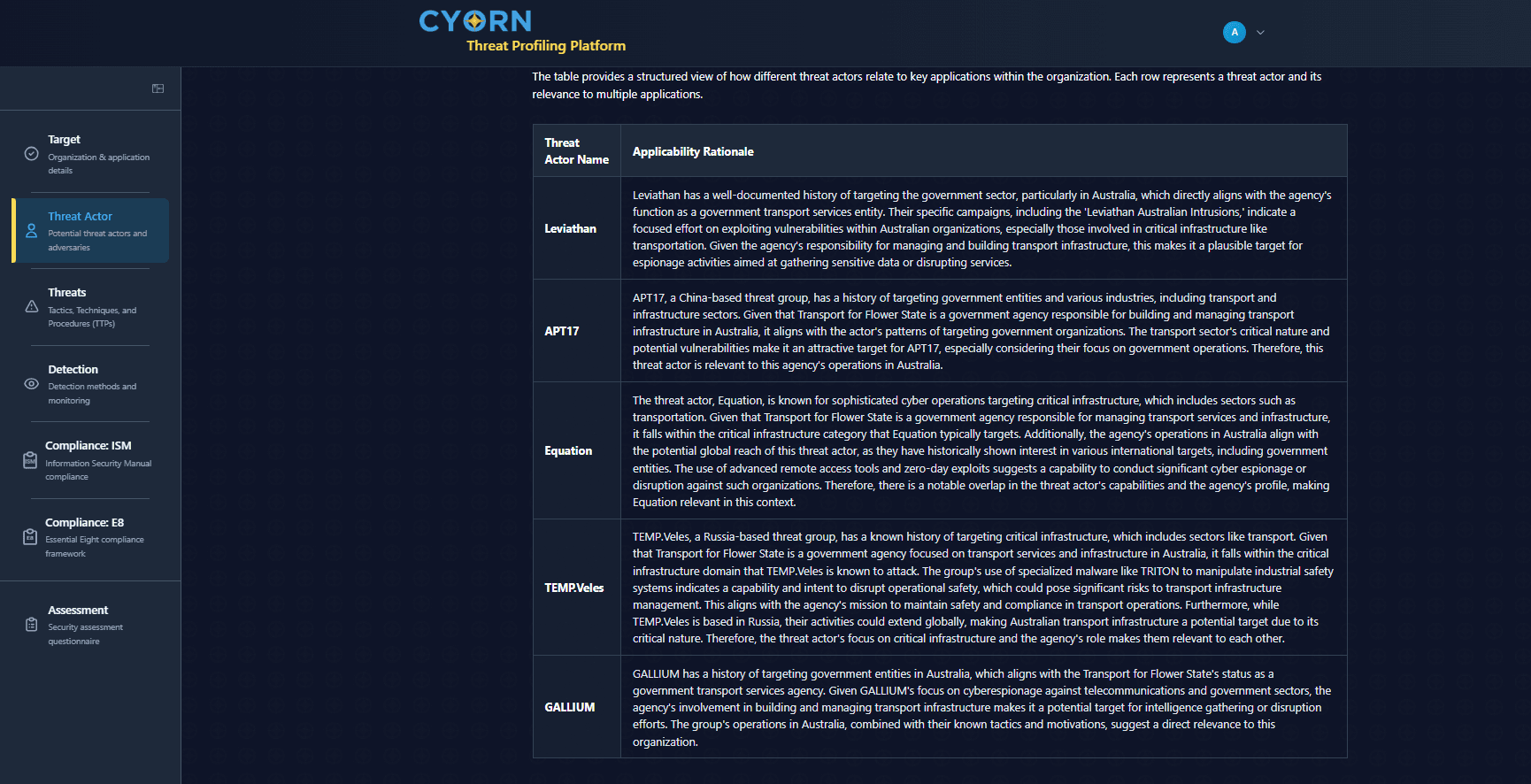
| ATT&CK mapping | A technique or sub-technique supported by the source observation |
| Detection requirements | The telemetry and fields needed to evaluate a proposed rule |
| Review outcome | What is accepted, rejected, uncertain, or awaiting evidence |
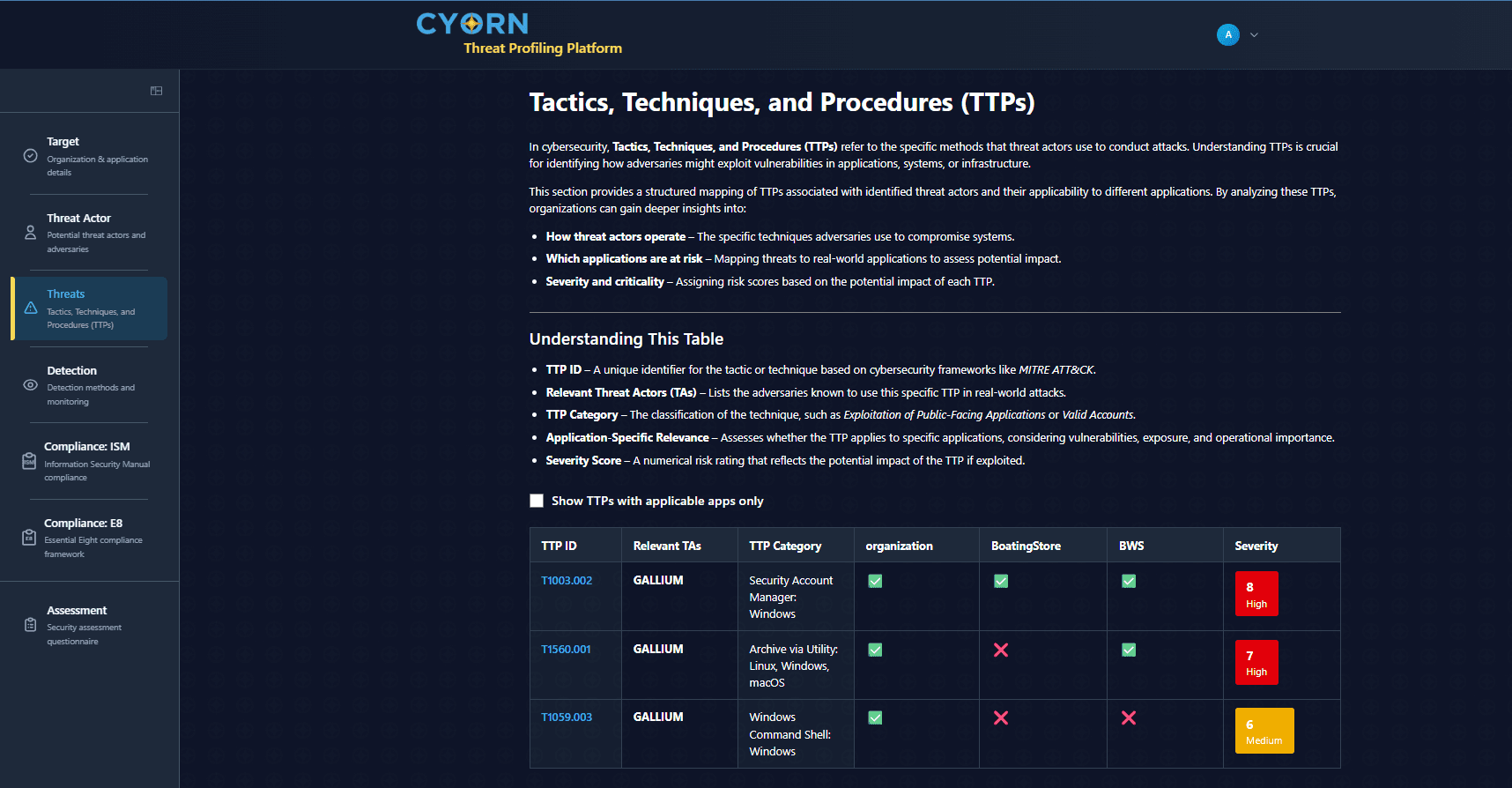
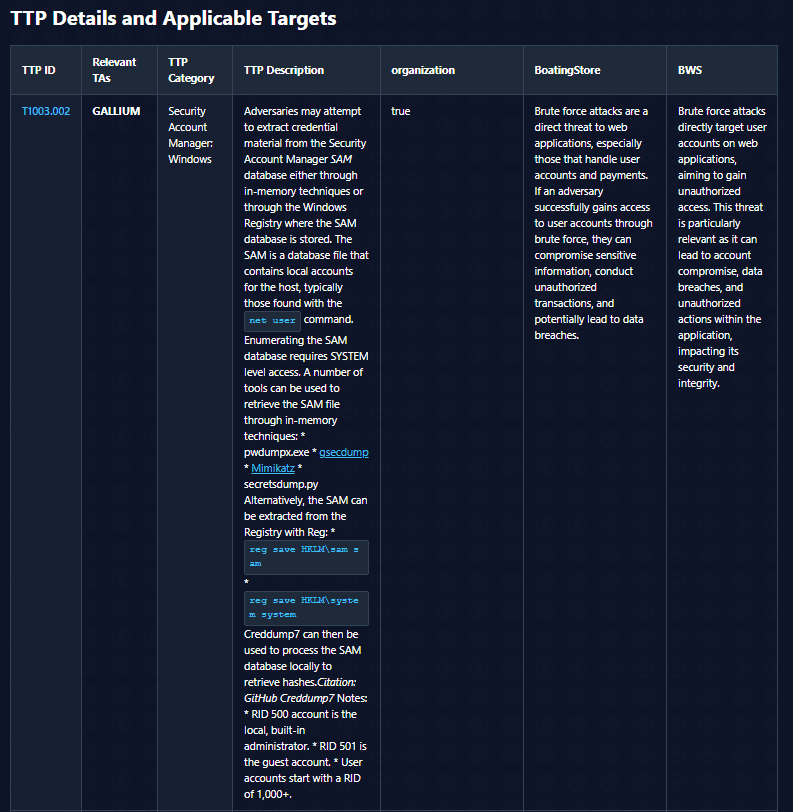
For illustration, a source may report suspicious use of a command interpreter. An analyst would verify the source, assess the proposed ATT&CK mapping, and confirm the required endpoint telemetry before testing a detection. This is an illustrative review workflow, not an attribution claim about a real actor or a customer incident.
How does threat profiling differ from vulnerability scanning?
Threat profiling asks what activity may pose a threat, how it behaves, and which defensive observations would be useful. Vulnerability scanning looks for weaknesses or exposures in the systems being assessed.
The activities complement each other. A profile can help prioritize behaviors to investigate, while scanning and asset information help assess local exposure. Neither a profile nor an ATT&CK label alone proves that a vulnerability exists in a customer's environment.
How is MITRE ATT&CK used in the platform?
The platform maps identified behaviors to ATT&CK so analysts can use a shared vocabulary when reviewing profiles and defensive coverage. ATT&CK organizes adversary behavior into tactics, techniques, and sub-techniques. It is not a certification that a generated profile is correct.
Review each mapping against the source observation and the applicable technique definition. A matching label without supporting behavior is insufficient. Coverage decisions must also consider which systems and telemetry exist in the environment being defended.
Are AI-generated detection rules ready to deploy?
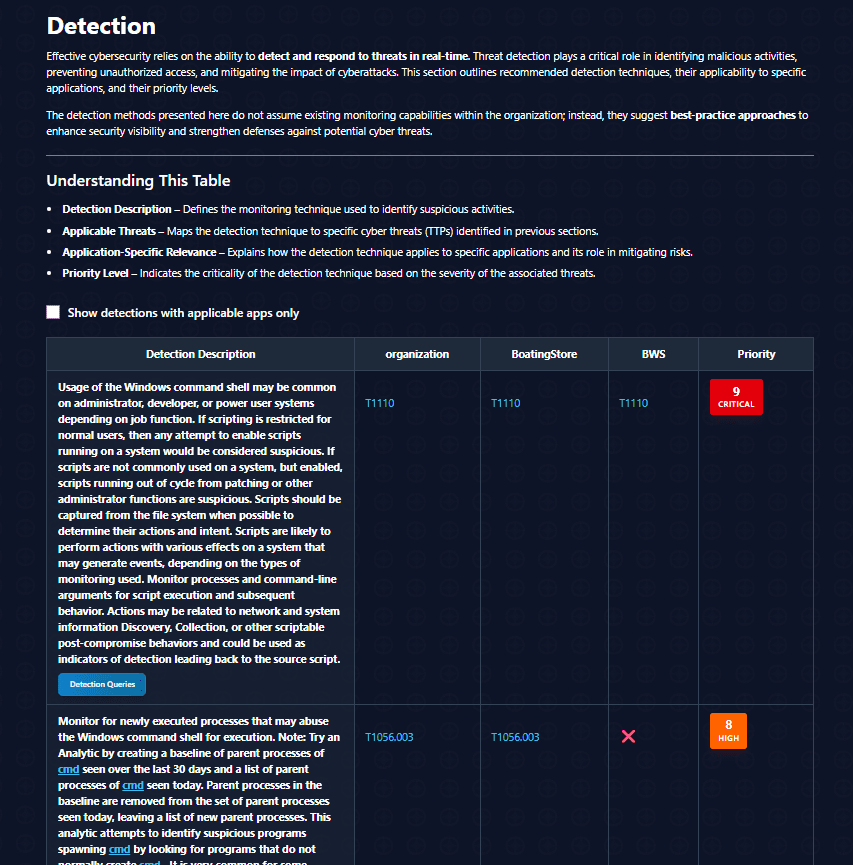
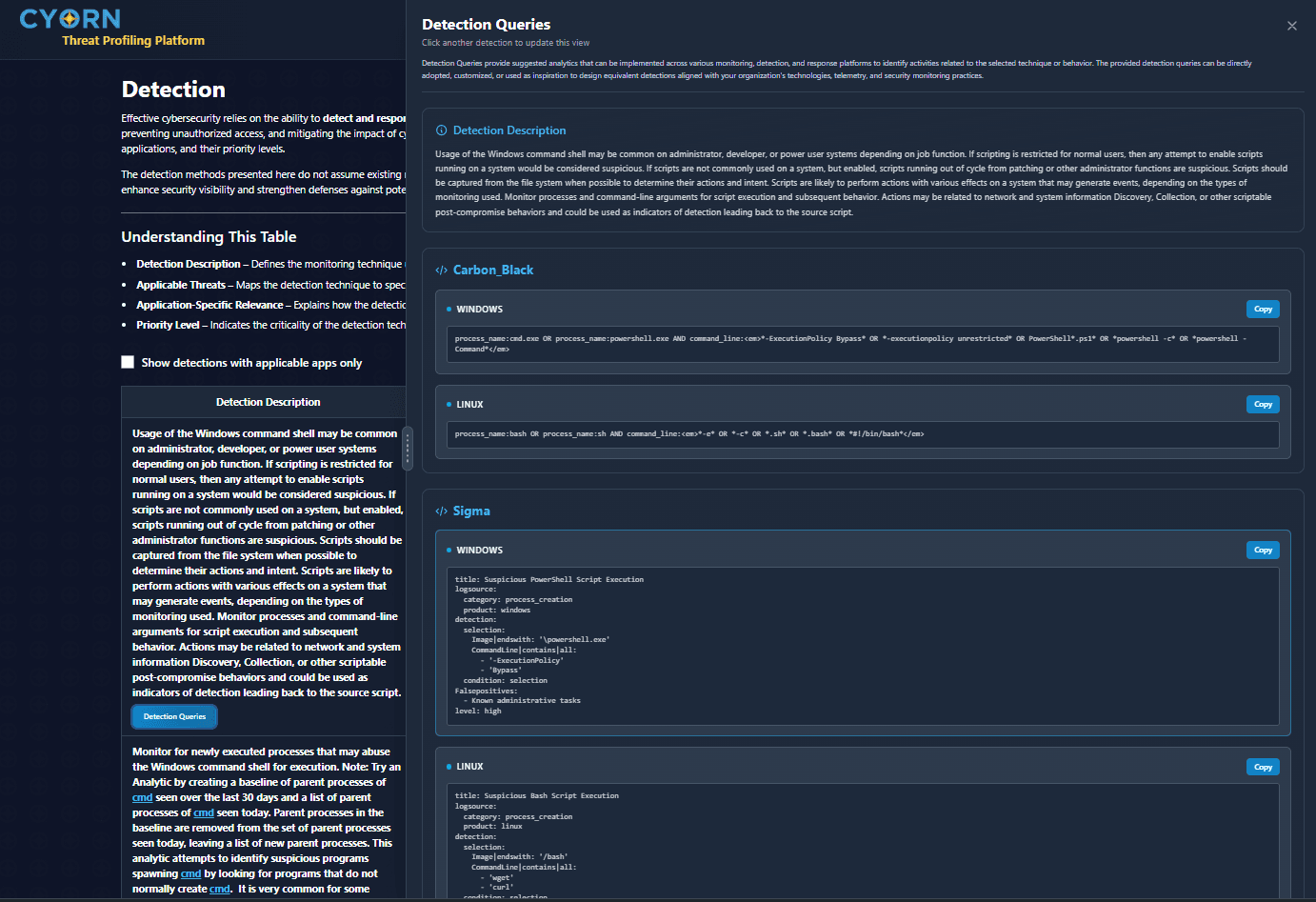
Treat generated rules as candidates for analyst review. The project documentation describes syntax validation and six export formats, but valid syntax alone does not establish that a rule will work accurately or safely in a particular SIEM or endpoint environment.
Before activation, confirm the destination and version, required fields, rule semantics, and available telemetry. Test relevant known events and representative benign activity. Review false positives, blind spots, query cost, and the response process if the rule fires.
Use a staged rollout with monitoring and a way to disable or revert the rule. An export is a handover artifact, not proof of successful detection or approval for direct deployment. Confirm required formats during scoping rather than assume every security product is supported.
How does the application support security teams and MSSPs?
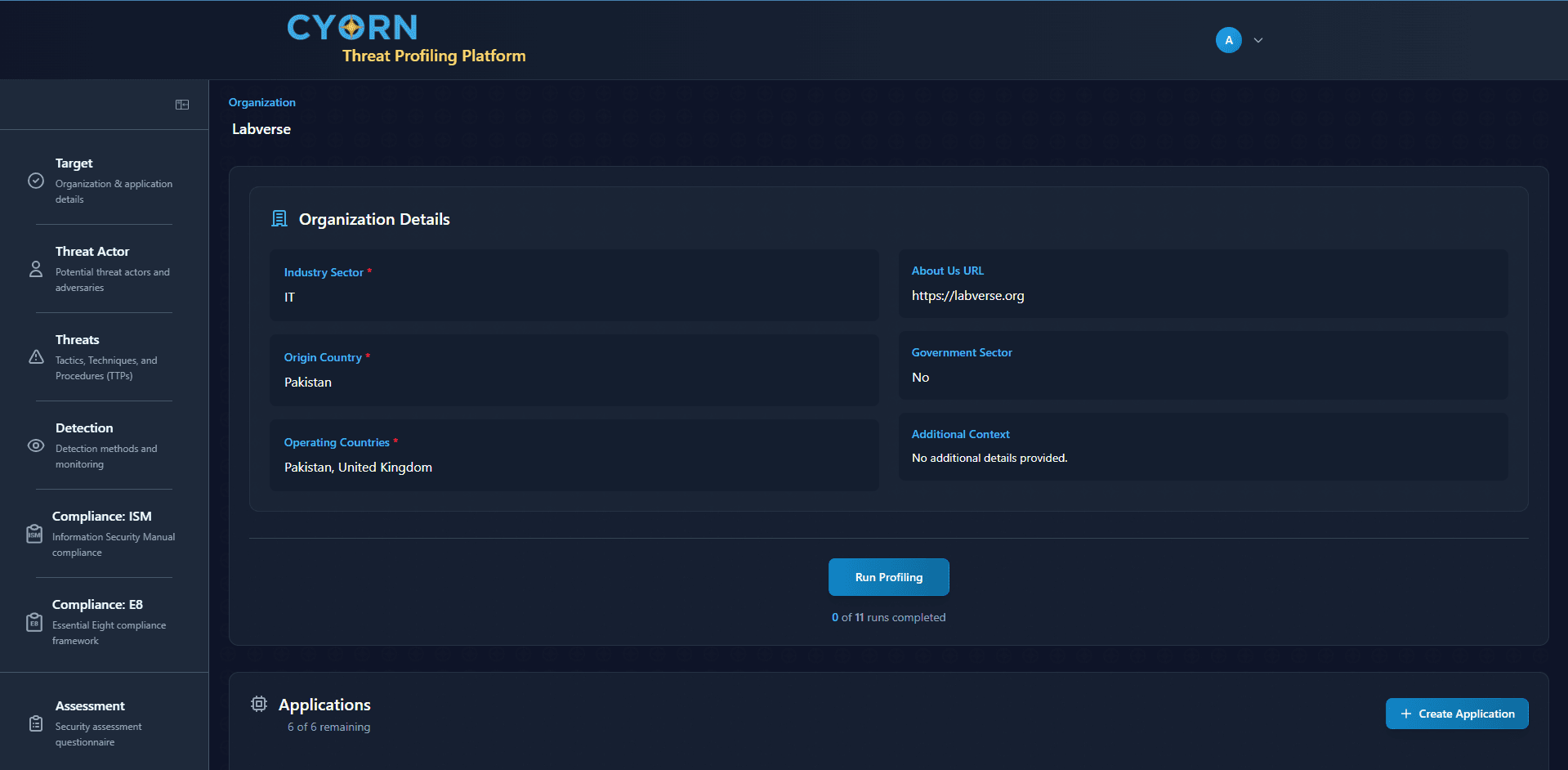
The design combines a React interface, NestJS backend, DynamoDB storage, and an AWS Step Functions analysis workflow. Organizational workspaces and role-based access support separate client environments. Subscriptions and usage quotas define access to analysis operations.
Tenant isolation must be an acceptance criterion. Verify that profiles, exports, usage records, and permissions cannot cross the intended organizational boundary. Architecture and role labels do not themselves prove isolation; denied-access cases need testing alongside ordinary workflows.
The diagram below gives a project overview. Deployment-specific access, logging, retention, and incident responsibilities need agreement for the client's operating environment.
What should a buyer ask before commissioning threat-intelligence automation?
Define the users, intelligence sources, review responsibilities, export requirements, and destination security tools. Ask how uncertainty is presented, how mappings can be reviewed, and how failed or incomplete analysis is distinguished from a completed profile.
Cost and scope depend on integrations, analysis volume, access controls, exports, and operational testing. Require a demonstration with agreed sample inputs and a clear handover. Evaluate usefulness and limitations rather than assume perfect detection or a particular time saving.
Learn about our AI engineering services, review reliability engineering for production operations, or discuss a security automation project.
Technical references
MITRE's ATT&CK FAQ defines tactics, techniques, sub-techniques, and procedures. Its data and tools guidance explains uses of ATT&CK data. These references support the framework explanation; the application workflow describes this project.
Updated October 27, 2026.
Dual-Account AWS Architecture
Vite • Tailwind v4 • Redux
23 Modules • EC2
16 Tables
9-Stage Pipeline
Auth • Storage • Email
Threat Intelligence
Company Account
AssumeRole
Project Gallery
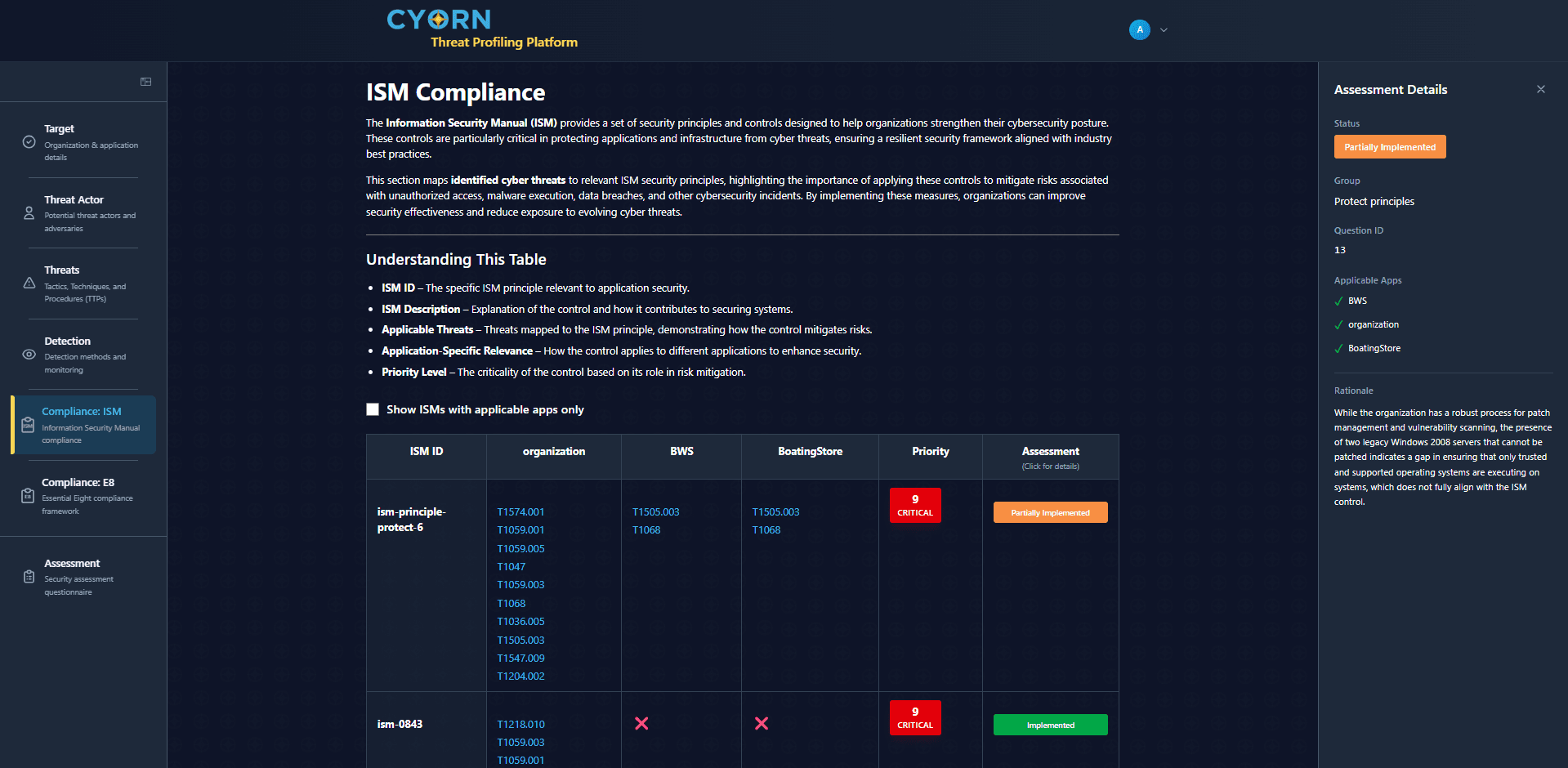
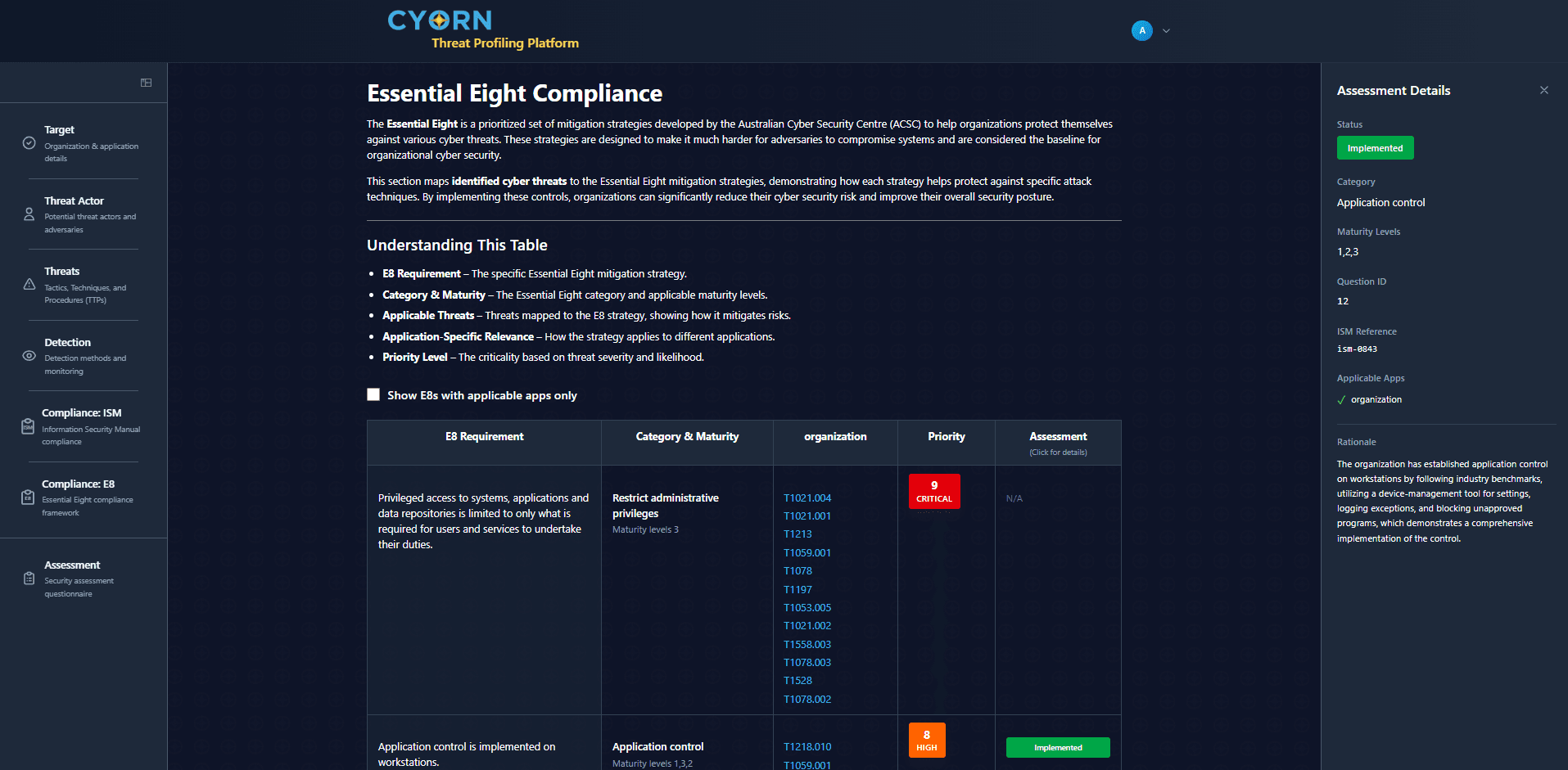
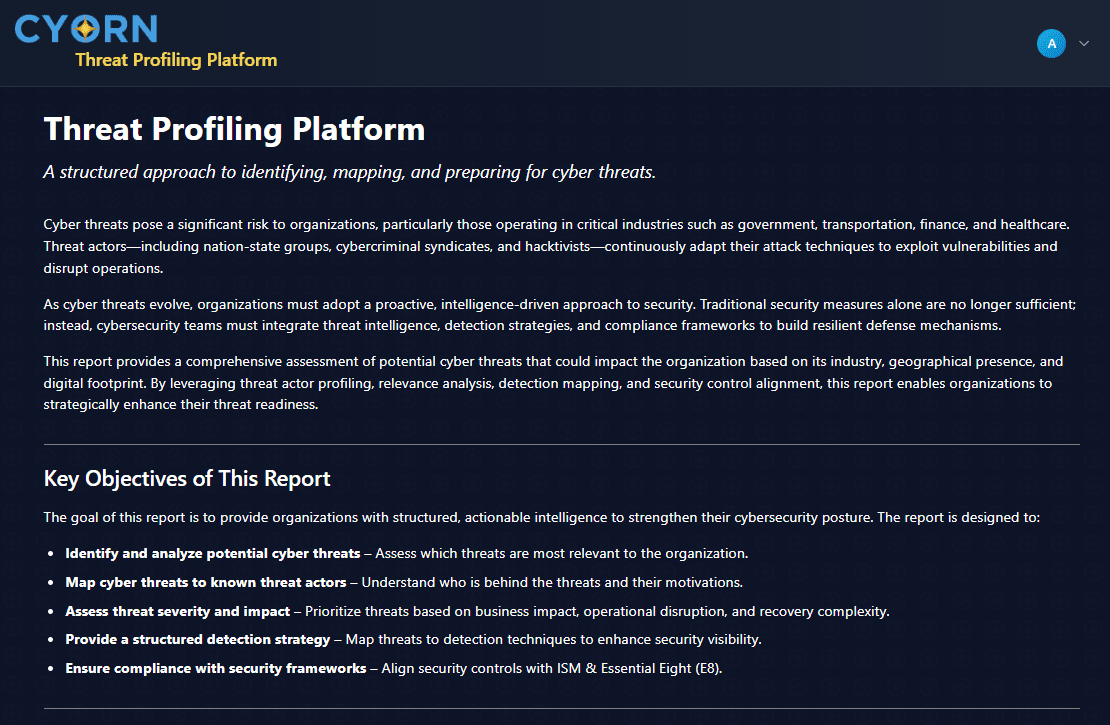
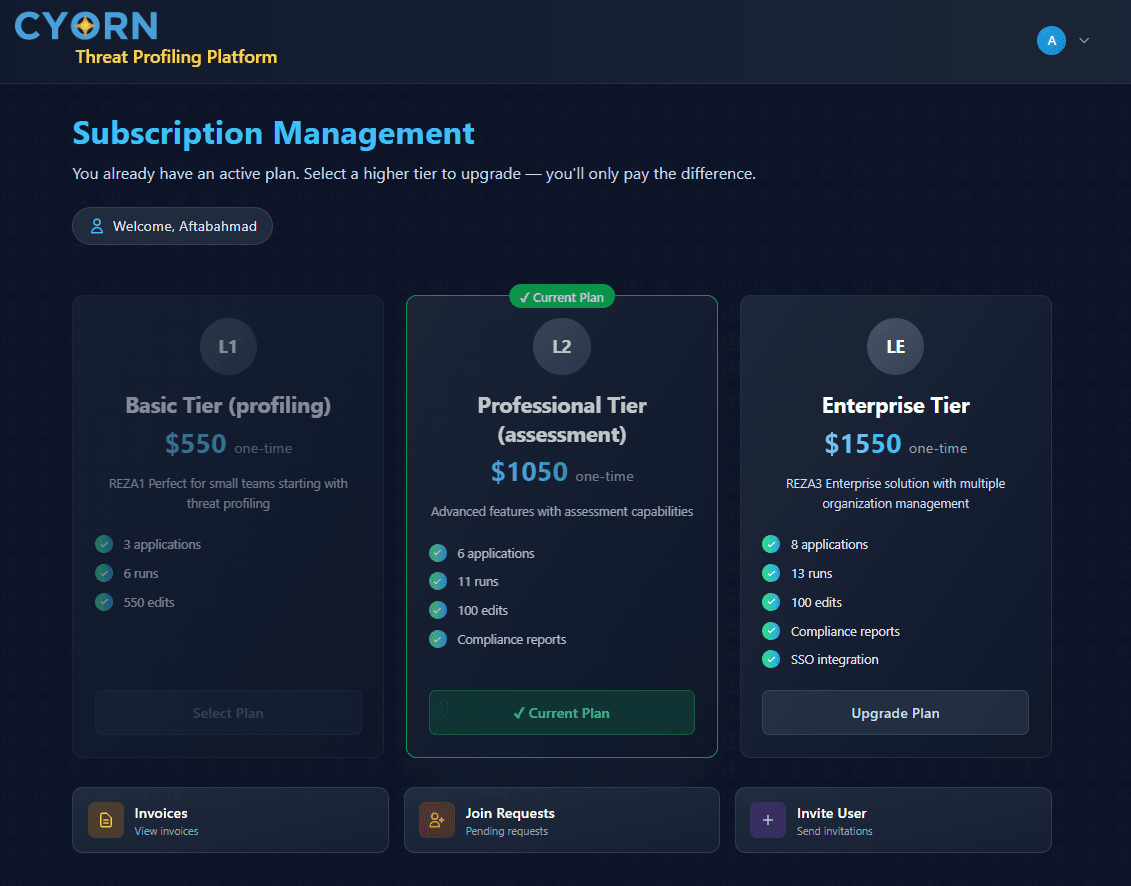
Planning a Similar Project?
Let's discuss your architecture and provide a free estimate for your project.